
Introduction
In a political showdown that captured the attention of Scotland, the Labour Party emerged victorious in the Rutherglen and Hamilton West by-election. This article delves into the remarkable events that unfolded during this electoral contest, shedding light on the key players, voter turnout, and the implications of this win.
A Landslide Victory
Labour Triumphs Over SNP
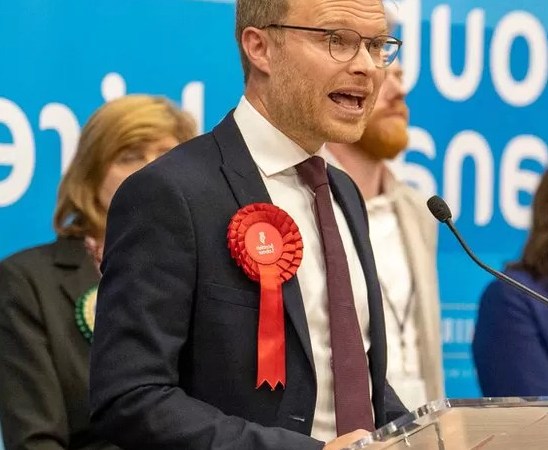
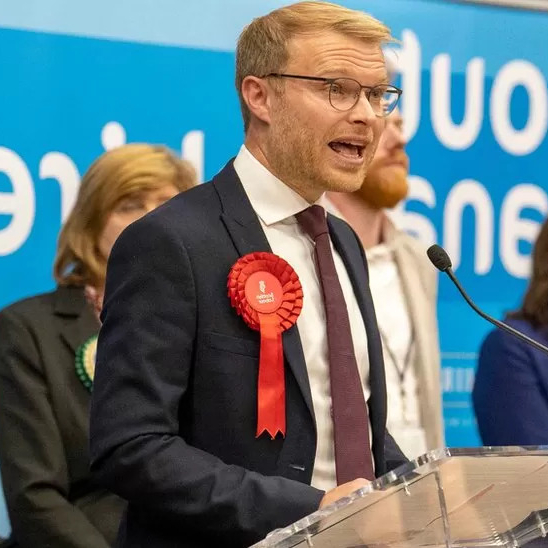
The by-election took an unexpected turn as Labour defeated the Scottish National Party (SNP) to secure the Westminster seat. Michael Shanks, the Labour Party’s candidate, secured an astounding 17,845 votes, surpassing the SNP’s Katy Loudon by more than double the margin. This victory marked a significant swing of 20.4% from the SNP to Labour, signaling a shift in the political landscape of the region.
A Message Sent
Keir Starmer’s Perspective
Labour leader Sir Keir Starmer hailed the win as a “seismic” moment. He stressed that the people of Rutherglen and Hamilton West had sent a clear message. Starmer emphasized the importance of winning back the trust of the Scottish people, describing the victory as the culmination of three-and-a-half years of hard work and humility on that journey.
SNP’s Disappointment
The First Minister’s Reaction
SNP candidate Katy Loudon, in her first major electoral test since Humza Yousaf succeeded Nicola Sturgeon as leader, received 8,399 votes. Nicola Sturgeon, the First Minister of Scotland, described the night as “disappointing” for her party. Yousaf acknowledged that the circumstances were challenging and cited a collapse in the Conservative vote as a contributing factor to Labour’s success.
A Fresh Start
Michael Shanks’ Vision
Michael Shanks, the winning candidate, expressed deep honor in being elected to serve the people of Rutherglen and Hamilton West. He conveyed a message of a “fresh start” and a departure from the divisiveness that had marked the SNP and Conservative governments.
Voter Turnout and Labour’s Surge
Key Statistics
The voter turnout for the by-election stood at 37.19%, a significant decrease from the 66.5% recorded at the previous general election. Despite the lower turnout, Labour’s vote surged by 24.1% compared to the 2019 general election, a testament to their campaign strategy and the appeal of their message.
Expert Analysis
Professor John Curtice’s Insights
Professor John Curtice, a prominent political analyst at Strathclyde University, lauded the result as a “remarkably good” outcome for Labour. He pointed out that the Labour vote in the constituency had reached nearly 59%, a surge of 24 points. This statistic indicated that Labour’s popularity in the region was nearing its levels from 2010, before a significant political shift occurred.
A Historically Competitive Constituency
Changing Hands
The constituency in South Lanarkshire has a history of changing hands between the SNP and Labour in recent general elections. Once considered a Labour stronghold, it shifted to the SNP in 2015 when Margaret Ferrier secured it with a majority of 10,000 votes. Labour managed to reclaim the seat in 2017 by a margin of less than 300 votes, only for Ferrier to regain it in 2019. The narrow margins made it one of the party’s most vulnerable Westminster seats.
Conclusion
Labour’s resounding victory in the Rutherglen and Hamilton West by-election has undoubtedly reshaped the political landscape of Scotland. It underscores the importance of trust, unity, and effective campaign strategies in winning the hearts and votes of the electorate.
FAQs
- What led to the by-election in Rutherglen and Hamilton West?
- The by-election was called after former SNP MP Margaret Ferrier was ousted by her constituents for breaking Covid rules.
- How did Michael Shanks secure the Westminster seat?
- Michael Shanks, the Labour party’s candidate, secured the seat with 17,845 votes, more than double the number polled by the SNP’s Katy Loudon.
- What was the voter turnout in the by-election?
- The voter turnout for the by-election was 37.19%, a significant decrease from the previous general election.
- What did SNP leader Humza Yousaf say about the results?
- Humza Yousaf acknowledged the disappointment in the results and expressed the need to regain the trust of the people of Rutherglen and Hamilton West.
- How has the constituency historically voted in recent elections?
- The constituency has changed hands between the SNP and Labour in recent general elections, with narrow margins making it a competitive seat.
 the blogs corner